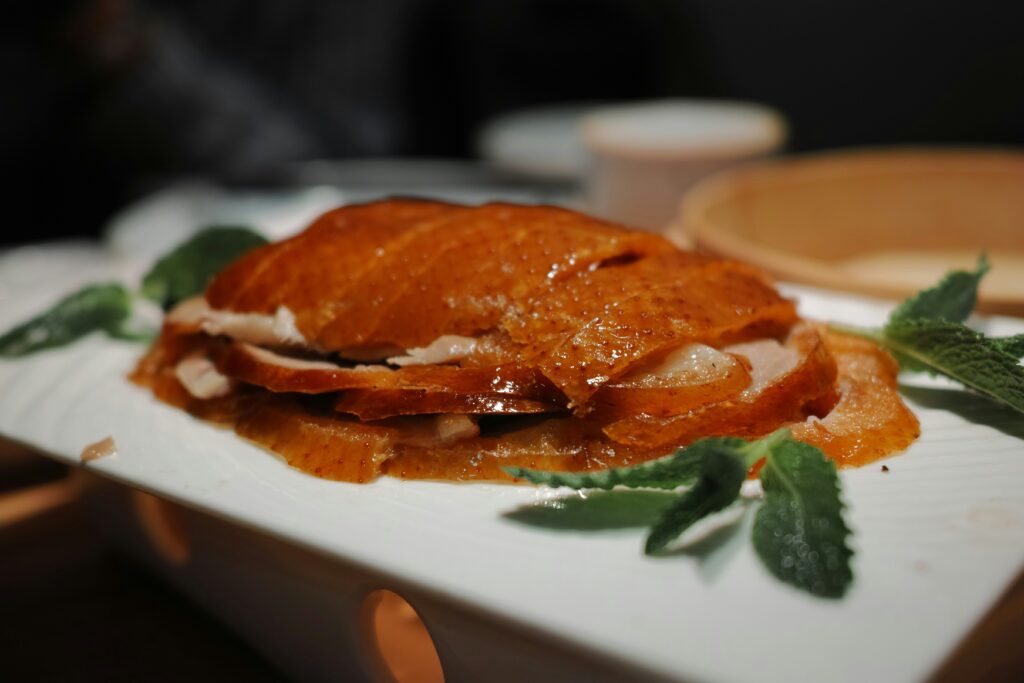
Duck skin crackles under the carver’s blade, fat rendered thin and glass-clear, the meat beneath left pink and loose enough to fold into a pancake without tearing. Meals in Beijing move along a straight line the way the city itself does, laid out on a north-south axis that has not shifted in six centuries, palace gates opening onto avenues that lead to altars, markets, and now to private dining rooms hidden behind unmarked doors. Where other Chinese cities build pleasure through contrast, Beijing builds it through precision and hierarchy: duck roasted to an exact number of days, tea poured only once everyone is seated, cocktails built from ingredients that reference dynasties rather than seasons. Few cities carry this much formal memory into something as ordinary as dinner. Beijing does it at every register, from a three-table meat pie stall in a hutong to a three-Michelin-star dining room a few streets away.
Beijing Landmarks: The Forbidden City, Temple of Heaven and the Great Wall
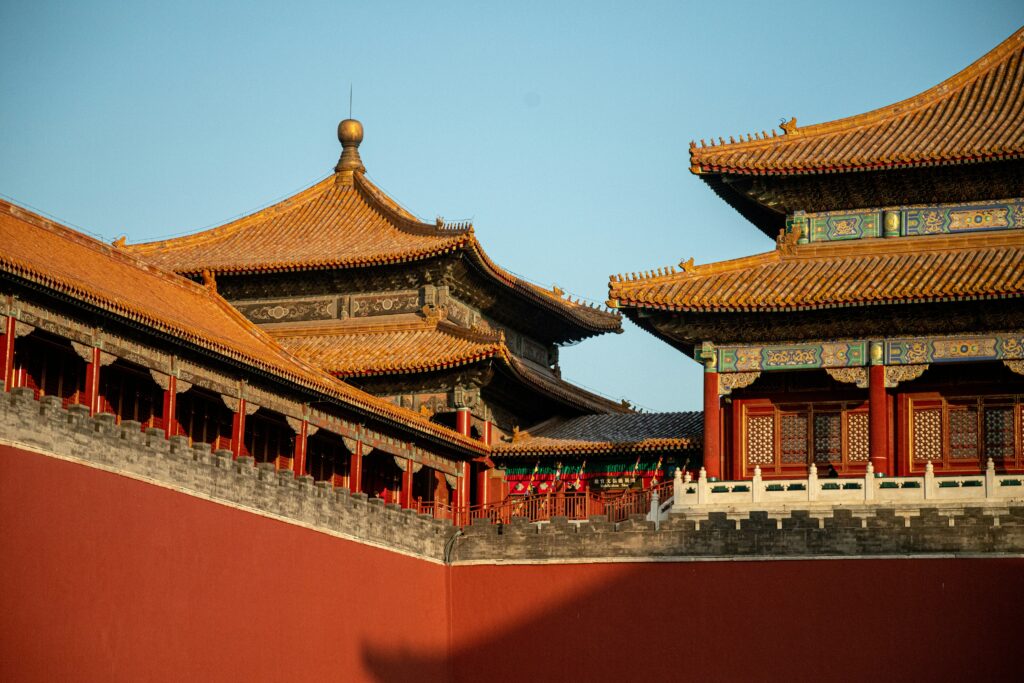
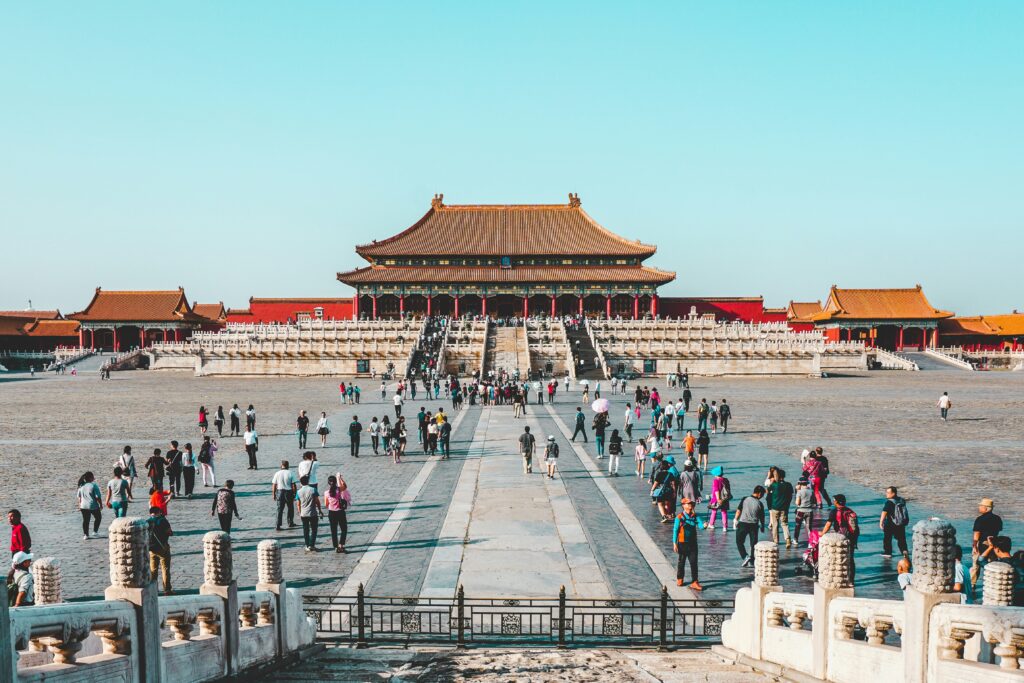
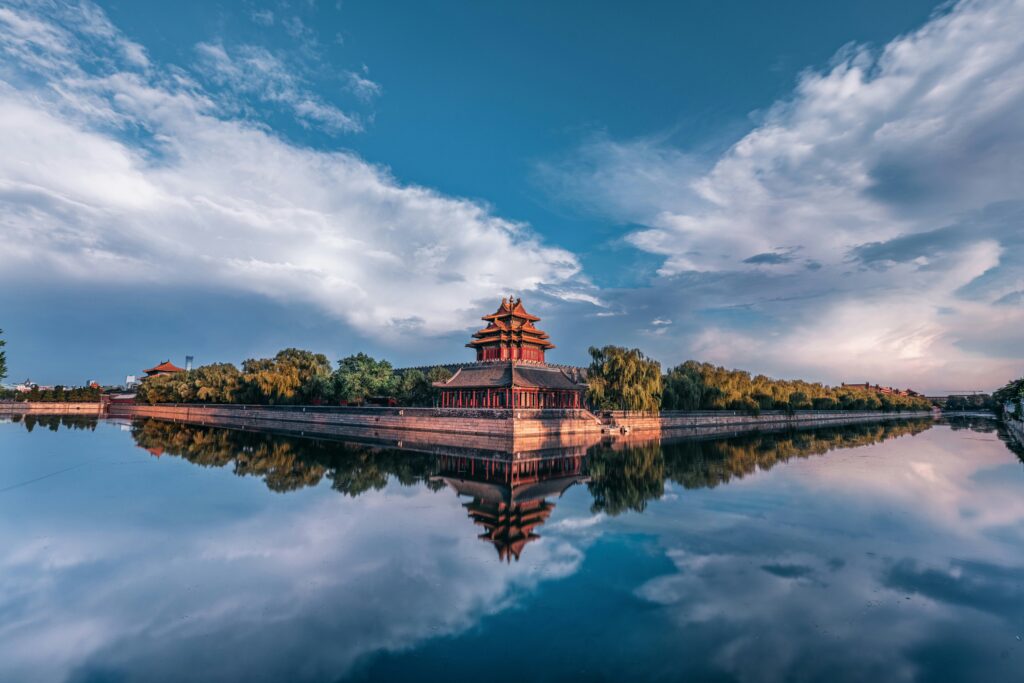
The Forbidden City works on a rhythm of its own, courtyards opening one after another along the same north-south line the whole city follows, the crowds thinning briefly right after the 8:30am opening and again after 2pm. Built between 1406 and 1420 for the Yongle Emperor, it housed 24 Ming and Qing emperors before it became a museum, and its scale rewards patience more than speed, two hours for the central axis alone, longer if the galleries are part of the plan. Tickets require booking exactly seven days ahead through the official site or WeChat, with no same-day sales, so the visit has to be planned before it happens rather than during it. Most five-star hotel concierge desks in Beijing handle this booking routinely, so travelers staying at a full-service property can hand it off rather than manage it themselves.
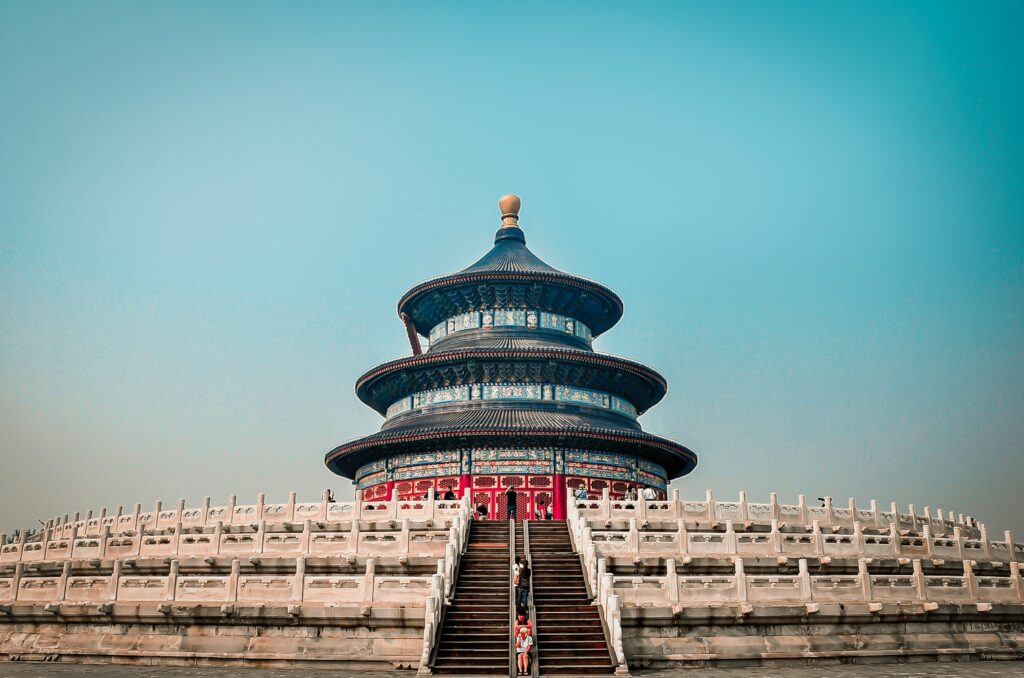
Temple of Heaven runs on the opposite rhythm, unhurried and communal. Built in the same decade as the Forbidden City, it was where emperors petitioned for good harvests on behalf of the empire, and today the grounds open before dawn to locals practicing tai chi under the same cypress trees that watched the ceremonies. Entering through the East Gate leads most directly to the Hall of Prayer for Good Harvests; the South Gate reaches the Circular Mound Altar first. Either way, the halls themselves keep shorter hours than the park around them, so an early start matters here too.
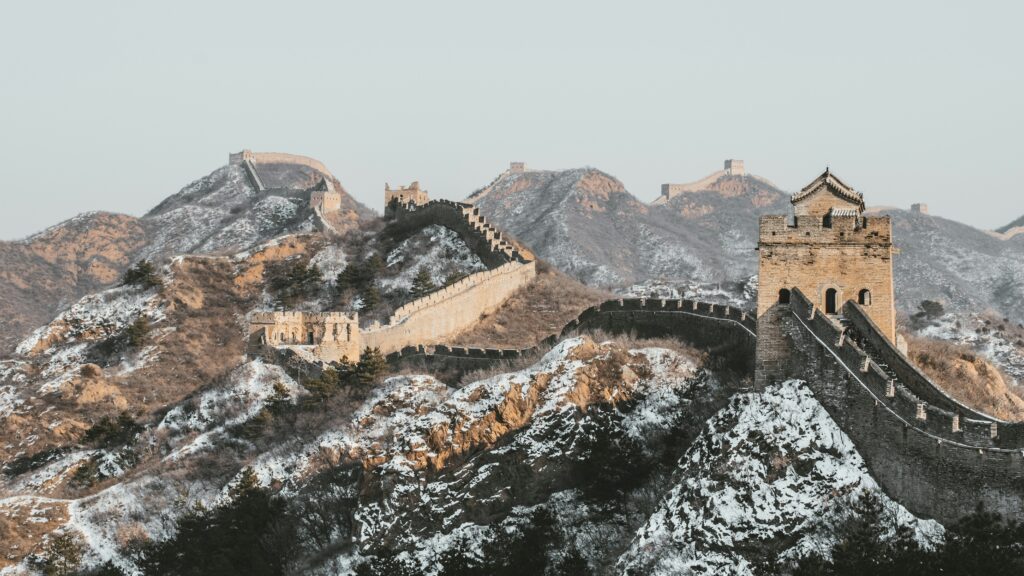
The Great Wall resists a single answer, because the three sections closest to Beijing serve different visits entirely. Mutianyu carries the tourist traffic well, cable car and toboggan included, without the density of Badaling, which remains the only section reachable by high-speed rail and therefore the easiest for a short trip. Jinshanling asks more of the visitor, two hours further out with no direct public transit, but returns a wall that is rugged rather than restored, closer to what the wall actually was before it became a monument to itself.
Practical Notes:
- Forbidden City: open Tue–Sun, 8:30am–5pm peak / 8:30am–4:30pm low season; RMB 60 peak / RMB 40 low season; book online exactly 7 days ahead, no same-day tickets.
- Temple of Heaven: park 6am–9pm (Apr–Oct) / 6:30am–9pm (Nov–Mar); combined ticket RMB 34 peak / RMB 28 low season; nearest subway Line 5, Temple of Heaven East Gate.
- Great Wall – Mutianyu: RMB 45 entry; Bus 916 from Dongzhimen, 1.5–2 hours.
- Great Wall – Badaling: RMB 40 peak / RMB 35 low season; 30 minutes by high-speed rail from Beijing North.
- Great Wall – Jinshanling: RMB 65 entry; 2–2.5 hours by car, no direct public transit.
Beijing Eats: Hutong Meat Pies and the Cult of Peking Duck
Peking duck sets the register for everything else, and Da Dong (大董) built its reputation by pushing back against the fattier, heavier versions of the dish, roasting birds for exactly 22 days and carving the skin thin enough that it shatters rather than chews, its flagship’s art-deco dining room in Nanxincang a long way from the dish’s street-stall origins. Ju De Lou (聚德楼饭庄) keeps closer to those origins, its fruitwood-roasted duck served alongside Beijing home cooking in a dining room that reads as old Beijing rather than reinvented Beijing, mid-range pricing and no pretense about the direction.
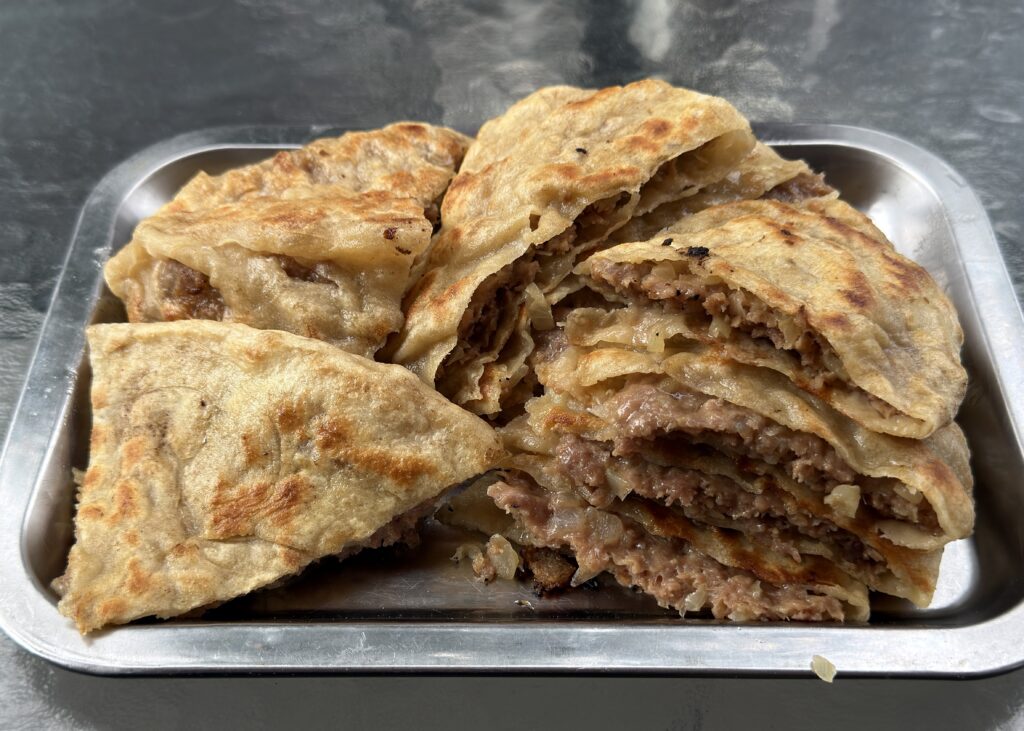
Further down the register, Bai Ji Rou Bing (白记肉饼) has run three tables and two griddles in the Qianmen hutongs for more than thirty years, pan-frying halal beef-and-onion meat pies to order, the crust charred at the edges and the filling loose enough to spill on the first bite; a bowl of lamb offal soup on the side is less an afterthought than the point. Bad Ass Lamb Hot Pot (羊大爷), despite the English name, runs a genuinely careful hotpot in Maizidian, around fifteen cuts of lamb from shin to cumin-dusted head meat, family tables and a Michelin listing sitting easily next to each other. TWM Bistro, a modern Chinese bistro in Sanlitun, is the least documented of the group, worth a call ahead rather than a walk-in until more is known about what’s actually on the menu. Mansion Cuisine by Jingyan (京宴·府邸菜) leans into the formal register of Beijing’s courtyard dining tradition, offering a private-room experience built around Huaiyang and Beijing fusion tasting menus in a restored siheyuan setting, reservation-only and best booked through the restaurant directly.
Practical Notes:
- Da Dong (Nanxincang): 1-2F, Nanxincang International Building, 22A Dongsi 10th Alley, Dongcheng; RMB 200–500/person; One Michelin Star; reservations recommended.
- Ju De Lou: East 3rd Ring Road South, Jinxin Diamond International Business Center, Chaoyang; budget-to-mid-range; walk-in generally fine.
- Bai Ji Rou Bing: roughly RMB 30/person; cash-friendly hole-in-the-wall, no reservation, 50 Xidamochang Street.
- Bad Ass Lamb Hot Pot (羊大爷): 39 Maizidian West Street, Chaoyang; mid-range; reservations recommended evenings and weekends.
- TWM Bistro: Sanlitun; modern Chinese bistro; dinner service; call ahead to confirm current menu, pricing, and exact address details.
- Mansion Cuisine by Jingyan (京宴府邸菜): located in a restored siheyuan in the central courtyard district; Huaiyang and Beijing fusion tasting menus; very high-end; reservations essential.
Beijing’s Michelin Register: Duck, Teochew and a Vegan Tasting Menu
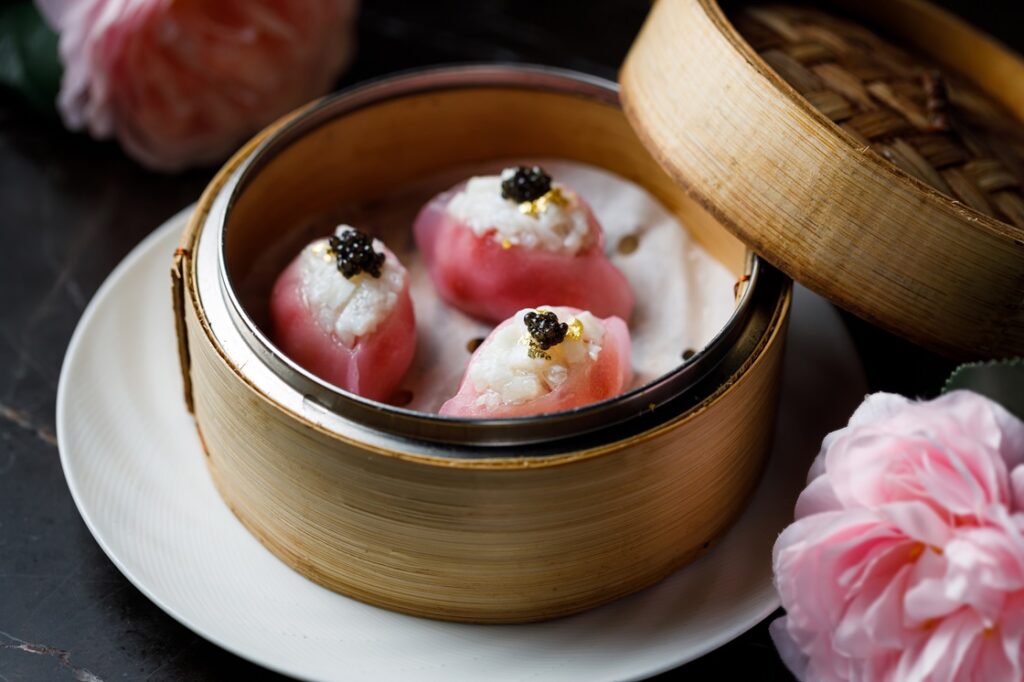
Chef 1996 takes the private room to its logical extreme, each of its bamboo-lined rooms in Chaoyang themed to a different year and the kitchen built entirely around Sichuan cooking rather than Beijing’s own culinary identity, its camphor wood-smoked duck reaching No. 52 on the 2026 Asia’s 50 Best 51–100 Extended List as the format’s first Sichuan entry. Lu Shang Lu (鲁尚楼) works from the opposite direction, sea cucumber and live seafood flown in daily from Shandong’s Jiaodong peninsula, its own 45-day roast duck served with caviar and prawn crackers, and a rare Michelin Sommelier award attached to its tea program rather than its wine list. Chao Shang Chao (潮上潮) goes further still, the only Three-Michelin-Star kitchen in the city, its Teochew cooking built on dishes like braised fish maw with thirty-year-aged dried radish that reward the kind of attention a tasting menu asks for.
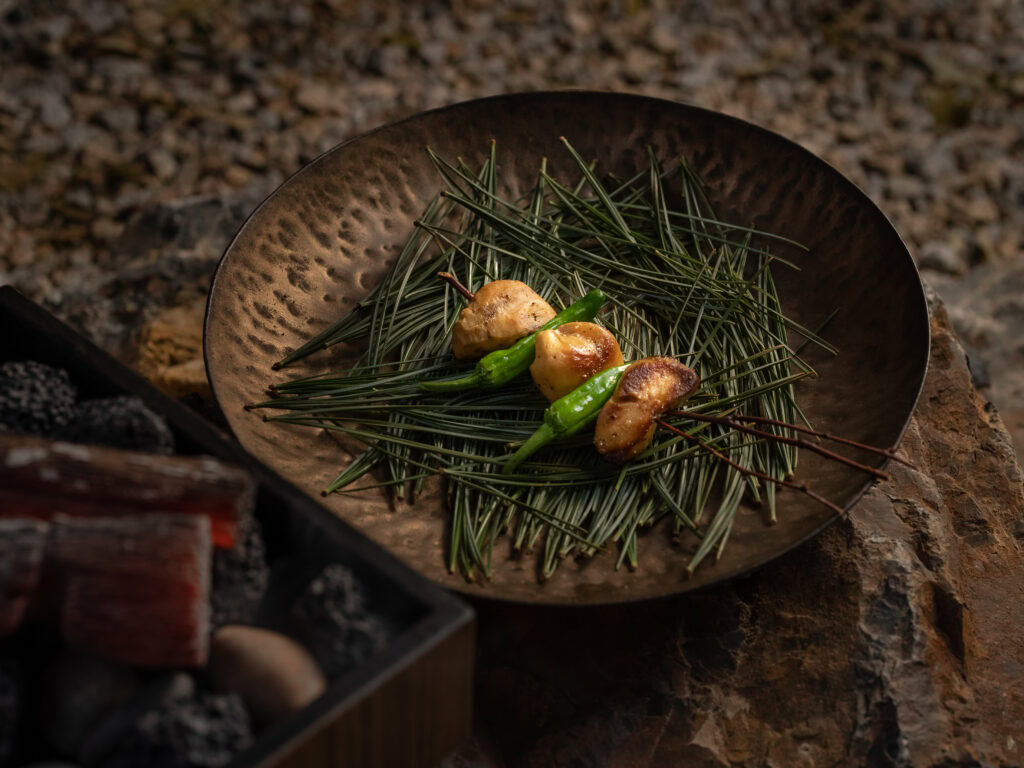
Giada Garden, Il Ristorante and The Horizon sit inside hotels rather than apart from them, Giada Garden’s Northern Italian menu at China World Hotel built around hand-made agnolotti and an all-Italian wine list, Il Ristorante bringing Michelin-starred chef Niko Romito’s contemporary Italian cooking to a 70-seat, Murano-glass-lit dining room at the Bulgari Hotel, and Horizon at the Kerry Hotel working the other direction with Cantonese double-boiled soups and its own red-date-wood roast duck. Old Tower breaks from all of it, a pescatarian tasting menu from a chef whose earlier restaurant made Asia’s 50 Best, French technique applied to Chinese seasonal ingredients in Sanlitun. Lamdre goes furthest of all: a fully vegan, fifteen-course tasting menu that rotates every three weeks along the 24 solar terms, Two Michelin Stars and a place on Asia’s 50 Best Restaurants 2026 (the guide’s claim that it’s the only Beijing entry on that list is not confirmed, so we treat it as one of several notable Beijing restaurants on the extended regional list).
Practical Notes:
- Chef 1996: 4A Jiangtaiwa, Xinghuo East Road, Chaoyang; private rooms only; high-end; reservation essential.
- Lu Shang Lu: 2F, Sunshine Financial Center Tower 1, 33 Jinghui Street, Chaoyang; Two Michelin Stars; high-end; reservation essential.
- Chao Shang Chao (CP Center): L406B, 4F, CP Center, 20 Jinhe East Road, Chaoyang; Three Michelin Stars; very high-end; reservation essential.
- Chao Shang Chao (Xicheng): Yinglan Building, near Fuchengmen; One Michelin Star, roughly RMB 380/person; more affordable than the CP Center branch.
- Giada Garden: No. 1 Jianguomenwai Avenue, China World Hotel, 3F, Chaoyang; One Michelin Star; six-course lunch menu around RMB 588; reservation recommended.
- The Horizon: Kerry Hotel, 1 Guanghua Road, CBD, Chaoyang; high-end hotel dining; reservation recommended.
- Il Ristorante – Niko Romito: Bulgari Hotel Beijing, Building 2, Courtyard No. 8 Xinyuan South Road, Chaoyang; One Michelin Star; reservation recommended.
- Old Tower: Sanlitun Taikoo Li North Village, Building N4, 4F, Chaoyang; tasting-menu format.
- Lamdre: Room 1-04, Building 14, Courtyard No. 4, Gongti Beilu, Chaoyang; Two Michelin Stars; RMB 1,299 tasting menu; reservation essential, book well ahead.
Beijing Bars and Nightlife: Cocktails and Where to Drink
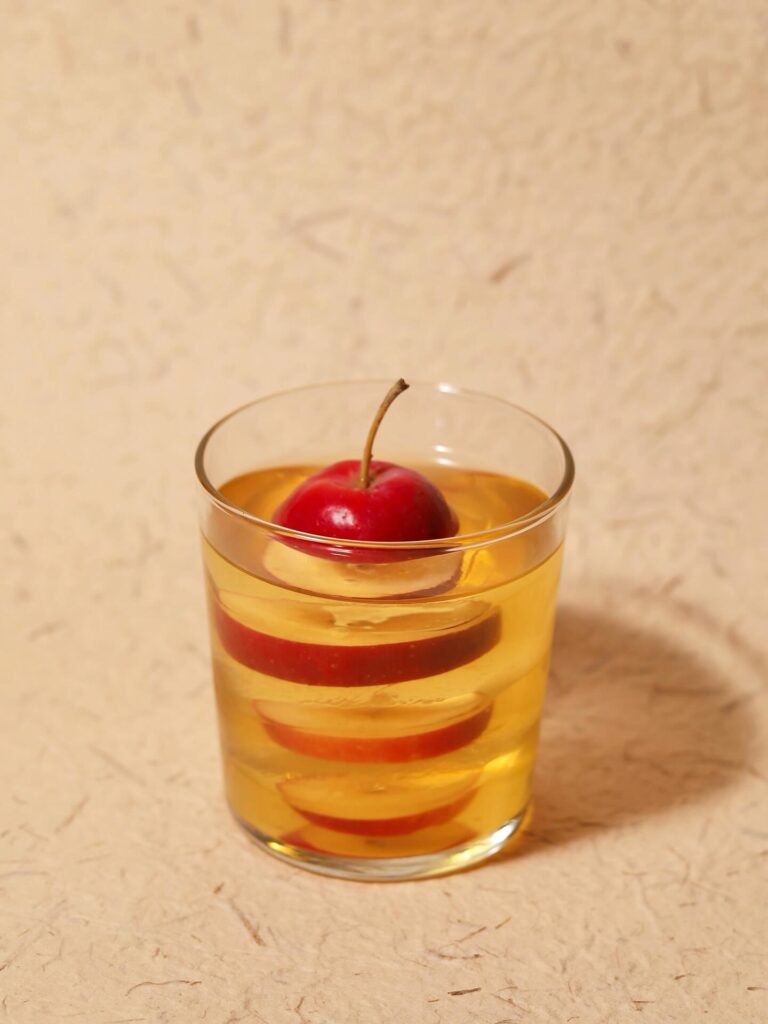
Long Fong (廊房鸡尾酒吧) set the tone for Beijing’s current cocktail scene by treating Chinese ingredients as a serious base rather than a garnish, its rotating “I’m From China” menu built around produce and techniques sourced from across the country, and it has since spun off its own lineage: A Bar of Crayon opened in 2025 from a former Long Fong collaborator, continuing the same approach with a debut menu built around his home province of Hebei. Chocolate + Milk runs an older, more theatrical register, a triangular back bar and malt-shop interior built around a genuinely deep range of independent-bottling Scotch, molecular technique folded in without displacing the classics.
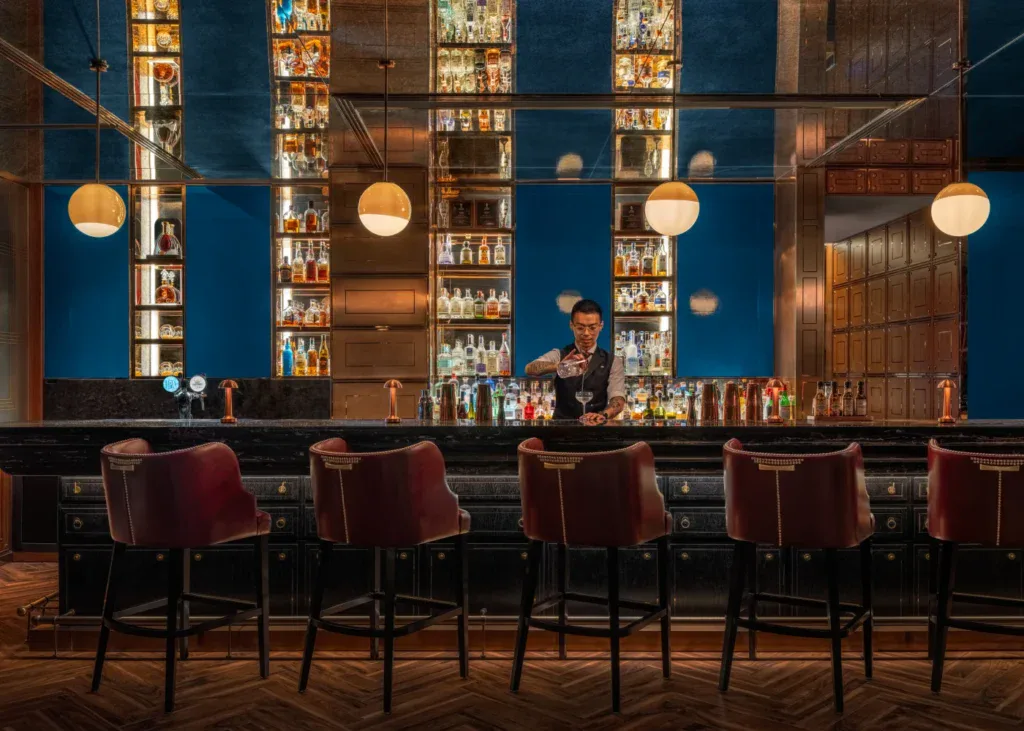
Bulgari Bar and MO Bar both work from inside five-star hotels, but toward different ends. Bulgari Bar centres on a hand-hammered bronze oval bar and an Aperitivo Hour built for see-and-be-seen Beijing, while MO Bar, tucked into the Mandarin Oriental Wangfujing, keeps things quieter, its cocktail list folding osmanthus wine and baijiu into an otherwise international spirits list. Deluge takes the quiet route instead, an intimate room nicknamed “The Haven” where bartenders build drinks around stated preference rather than a fixed menu. Marzaka Tropical Room remains the outlier of the group, a tropical-themed room that surfaced during Beijing Cocktail Week 2026 with almost no independent coverage since, worth confirming directly before treating it as a fixed address.
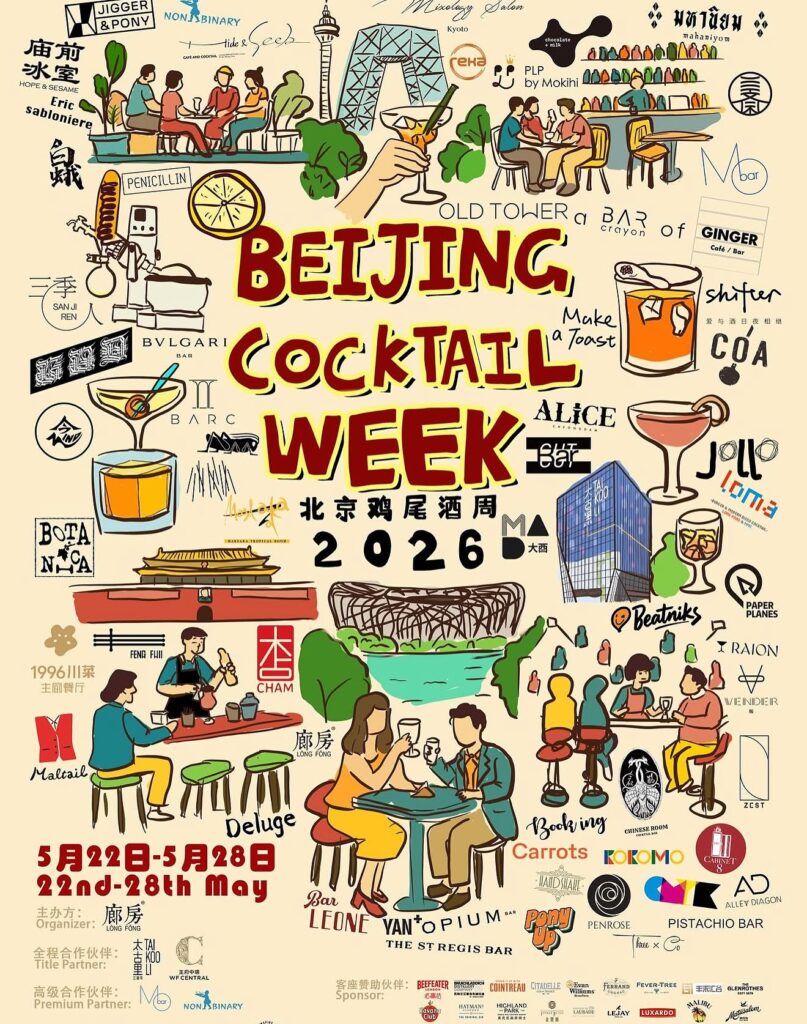
Beijing Cocktail Week, launched in May 2026, is now an annual citywide celebration that transforms more than 20 bars across five districts into a rotating showcase of international and domestic mixology talent, with guest shifts from bars like Hong Kong’s Bar Leone and Penicillin, Seoul’s Zest and Bar Cham, Singapore’s Jigger & Pony, Tokyo’s Mixology Salon, Mexico City’s Handshake Speakeasy, and a dozen others, alongside pairing dinners at venues like Lamdre, Old Tower, and Chef 1996, and late-night “I’m From China” supper sessions at TWM Bistro featuring regional Chinese ingredients and cocktails from across the country, all without a single festival site—instead, the week unfolds across the city’s best cocktail bars, with walk-ins accepted everywhere and reservations recommended for the dinners, making it a compelling reason to time a Beijing visit around late May, when the city’s bar scene finally steps onto the international stage.
Practical Notes:
- Long Fong: 97 Jinbao Jie, Chaoyang; open daily 7pm–2am; cocktails average around RMB 180.
- A Bar of Crayon: N4-L33, Sanlitun Taikoo Li North, 19 Sanlitun Lu, Chaoyang; open 6:30pm–1:30am.
- Chocolate + Milk: 10 Xingfu Sancun, Fifth Alley, Chaoyang; cocktails RMB 80–95.
- Bulgari Bar (Il Bar): Building 2, Courtyard No. 8 Xinyuan South Road, Chaoyang; luxury pricing, cocktails from around RMB 200.
- MO Bar: Mandarin Oriental Wangfujing, 269 Wangfujing Street, Dongcheng; luxury hotel pricing.
- Deluge: Unit 1-8, Shuiduizi Beili, west gate of Parkfront Mansion, Chaoyang; open daily 7pm–late; roughly RMB 120–200/person.
- Marzaka Tropical Room: address and hours unconfirmed, check directly before visiting.
- Beijing Cocktail Week: annual event held in late May; follow official WeChat account “BJCW北京鸡尾酒周” or Instagram @beijing_cocktail_week for future dates; walk-ins accepted at most venues, reservations recommended for pairing dinners.
Where to Stay in Beijing: Hotels for Every Style
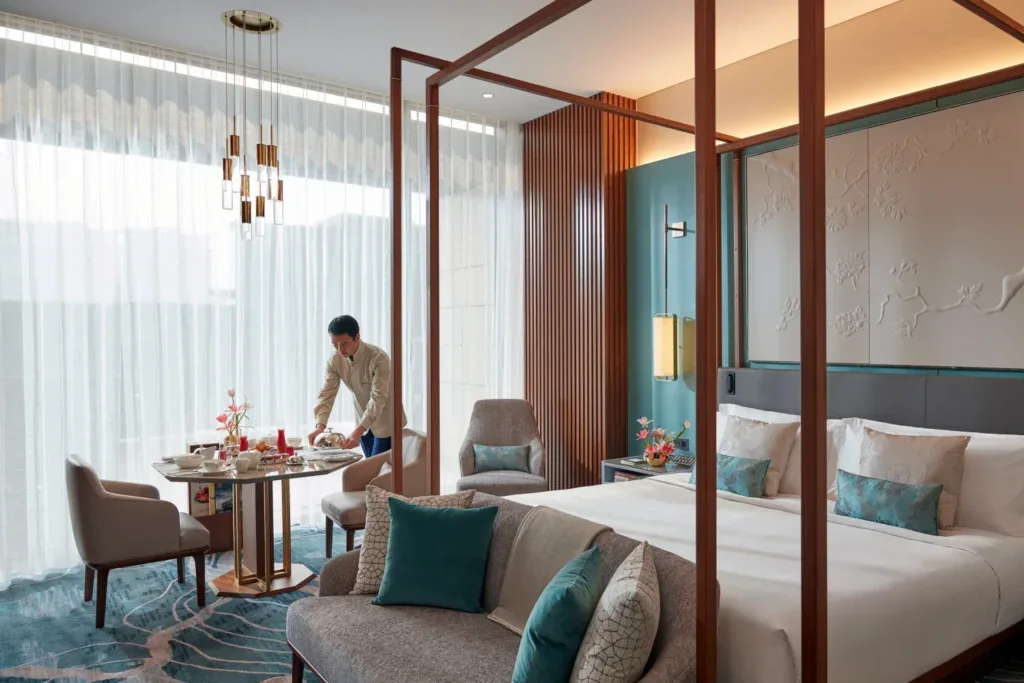
The Peninsula Beijing and Mandarin Oriental Wangfujing sit a few streets apart in the same shopping district, but come from different eras of the city’s luxury hotel history. The Peninsula opened in 1989 as the Palace Hotel, China’s first true luxury property, and a RMB 835 million renovation in 2016–2017 turned it into the capital’s only all-suite hotel, 230 suites built around The Lobby, Jing and Huang Ting downstairs. Mandarin Oriental Wangfujing, opened thirty years later in 2019, works at a smaller scale entirely, 73 design-forward rooms and an Adam Tihany-designed grill room, the newer property choosing intimacy over scale.
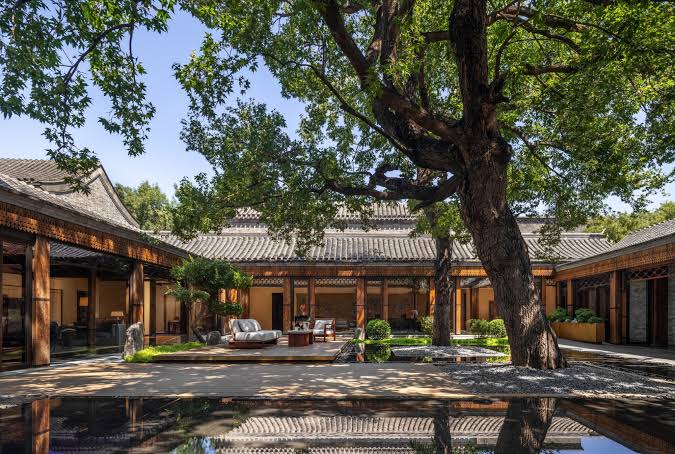
Mandarin Oriental Qianmen, opened in September 2024, breaks from both. Built inside a restored hutong of 42 courtyard houses on the Beijing Central Axis, it trades hotel-tower logic for something closer to a small village, a Michelin-starred Cantonese restaurant and the Italian restaurant Vicini spread across the courtyards rather than stacked into floors. Of the three, it is the one that treats the hutong itself as the amenity rather than a backdrop for one.
Practical Notes:
- The Peninsula Beijing: 8 Jinyu Hutong (Goldfish Lane), Wangfujing, Dongcheng; all-suite; roughly RMB 2,140–RMB 3,200+/night.
- Mandarin Oriental Wangfujing: 269 Wangfujing Street, Dongcheng; opened 2019; roughly RMB 3,770–RMB 13,600+/night.
- Mandarin Oriental Qianmen: No. 1 Caochang Alley 10, Dongcheng; opened 2024; from around RMB 12,888/night.
Frequently Asked Questions
How many days do you need in Beijing?
Three full days covers the essentials at a reasonable pace: one for the Forbidden City and Temple of Heaven, one for the Great Wall, and one for hutong eating and a Michelin-level dinner. Five days allows time for both Mutianyu and a slower food-and-bar itinerary without rushing.
What is the best area to stay in Beijing?
Wangfujing puts you closest to the Forbidden City and suits a first visit. Qianmen and its restored hutongs suit travelers who want the Central Axis on their doorstep. Chaoyang and Sanlitun put you nearest the city’s best bars and modern dining.
Is Da Dong worth visiting for Peking duck?
For most visitors, yes. Da Dong’s 22-day roasting process produces a leaner, crisper duck than the older, fattier style, and the Nanxincang flagship is easy to reach from central Beijing. Ju De Lou is the better choice for a more traditional version of the same dish.
Do you need to book Forbidden City tickets in advance?
Yes. Tickets must be booked online exactly seven days ahead through the official site or WeChat, with no same-day sales, so this is the one booking to plan before anything else on a Beijing itinerary.
Which Great Wall section is best for a day trip from Beijing?
Badaling is the only section reachable by high-speed rail and suits travelers short on time. Mutianyu is the better balance of accessibility and scenery for most visitors. Jinshanling suits travelers who want a rugged, less-restored wall and don’t mind a longer drive.
Where should I go for cocktails in Beijing?
Long Fong and A Bar of Crayon in Chaoyang lead Beijing’s cocktail scene, both building menus around Chinese ingredients rather than imported spirits and techniques. Chocolate + Milk is the pick for whisky drinkers, while Bulgari Bar and MO Bar suit a dressier night inside a five-star hotel.
Back at the carving station, the duck arrives sliced and precise, pancakes stacked and scallion cut into even lengths, the whole sequence repeating almost unchanged from the courtyard restaurants of Qianmen to the private rooms of Chaoyang. Tea gets poured, cocktails get built around ingredients with centuries behind them, and the wall keeps running north of the city whether anyone climbs it that day or not. Beijing doesn’t rush any of it. The same formal patience that laid out the Forbidden City’s axis six hundred years ago still sets the pace for how the city eats, drinks and rests today.
Note: Opening hours, ticket rules and reservation policies in Beijing change often, particularly for newer restaurants and bars, confirm details directly before visiting, especially for the venues flagged above.