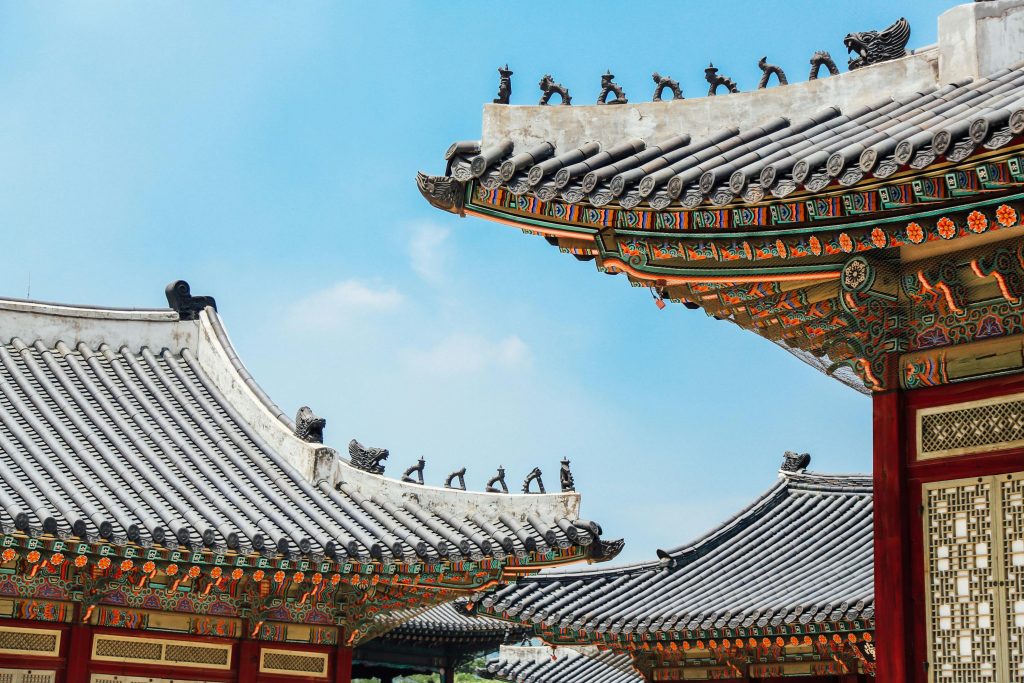
Seoul’s reputation travels globally through choreography, cinema and glass towers, yet the city’s credibility is built far more quietly through what it cooks and what it pours. Rustic broth houses and charcoal grills operate with the same seriousness as Michelin starred tasting counters, while a bar scene of genuine regional weight balances technical precision with restraint. The range appears wide, but the governing logic is singular, because whether seated at a gukbap table at noon or a cocktail counter in Gangnam at midnight, Seoul rewards calibration over spectacle.
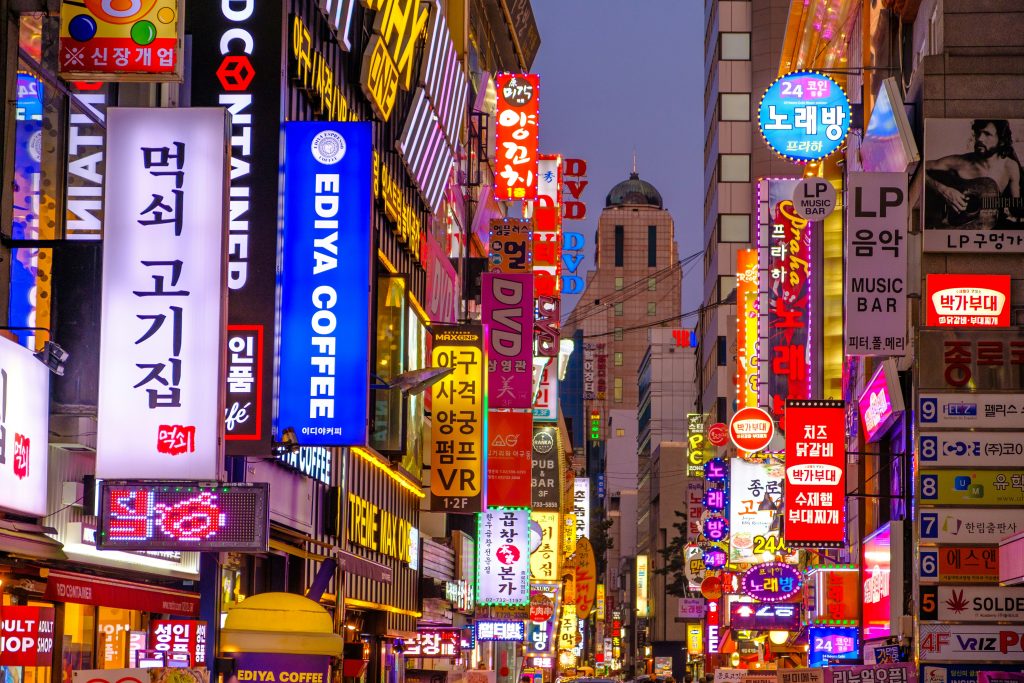
Seoul’s Core Districts Explained
When Seoul operated as a dynastic capital, authority was concentrated around palace grounds and mountain ridgelines, and although those boundaries have dissolved, the instinct for order remains visible in how the city now organises itself around the Han River. North of the Han, Jongno anchors heritage and palace proximity, while Myeongdong compresses retail and beauty culture into relentless commercial density. South of the river, Gangnam and Cheongdam consolidate upscale shopping, corporate headquarters and high end dining into a polished grid, as Hongdae channels youth energy and nightlife, Seongsu reshapes factories into design led cafés, and Itaewon maintains its international character. The walls are gone, but the river now divides Seoul into clearly defined zones of commerce, culture and cuisine.
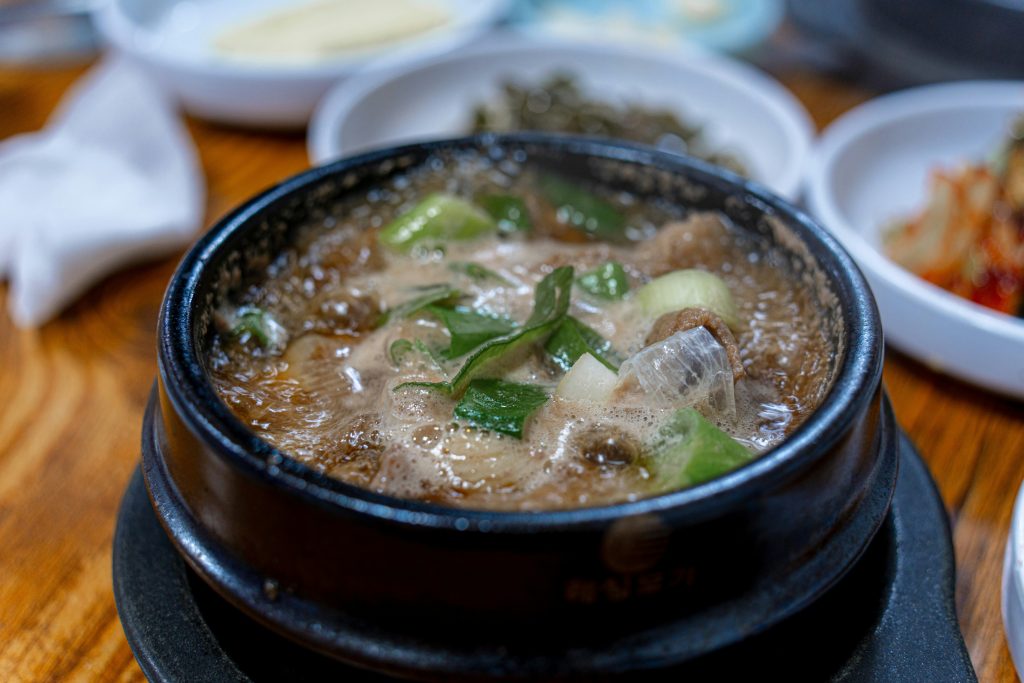
There Are Two Registers To Casual Eating In Seoul, Fire And Broth
This instinct for structure is most legible in casual dining, where broth and flame function as elemental grammars rather than comfort tropes. Through broth, Seoul communicates patience shaped by kimjang tradition and fermentation in onggi (earthenware jars), where preservation once determined survival. Mugyo-dong Yujeong Octopus Cheongdam binds chilli to nakji bokkeum with controlled intensity, Namsanter Cheongdam’s army stew (budae jjigae) folds post war adaptation into layered stock, and Yeongyang Centre Apgujeong’ssamgyetang aligns nourishment with sambok seasonal logic. At Sinuiju Chapssal Sundae blood sausage and rice (sundae gukbap) sings, while at Ujong beef rib soup (galbitang) and bulgogi anchor the table, sweetness and seasoning remain disciplined against broth clarity.
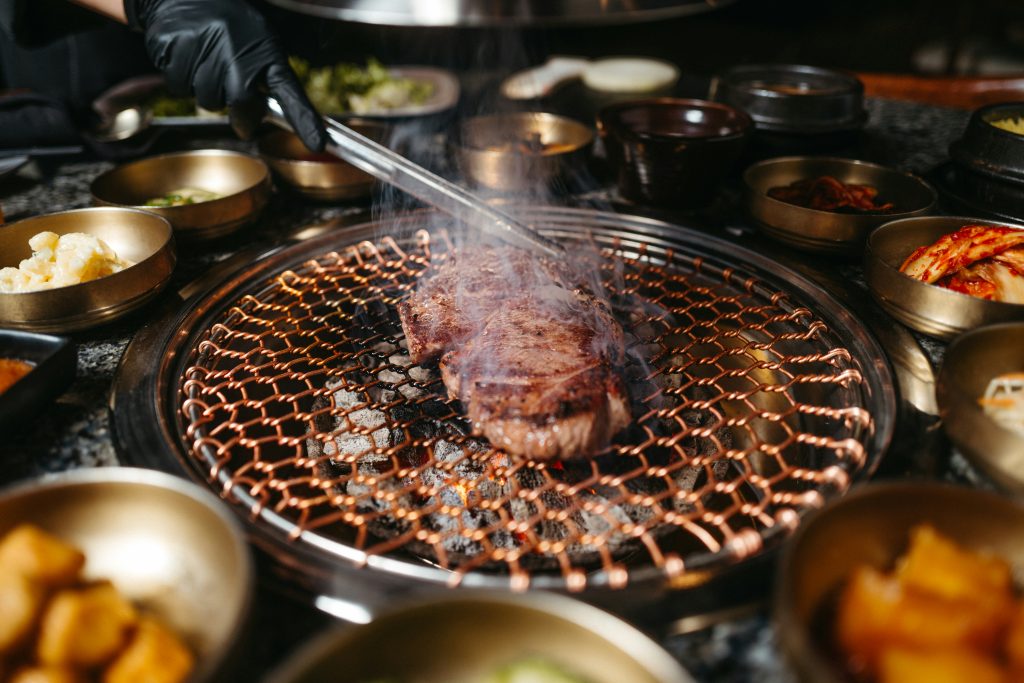
Flame introduces the second register, particularly around Majang and Gangnam, where butchery culture and communal grilling convert protein into authority. Sambong Butchers Korean BBQ sits confidently in this lineage, treating beef with technical clarity and timing that turns charcoal into instrument rather than theatre, reinforcing the city’s seriousness about sourcing and cut. Hwaro-gi Majang protects hanwoo marbling with patience over live coals, Ujeong Yanggopchang handles gopchang with texture first restraint, and Gold Pig, Geumdwae Sikdang, grills handon pork with control that transforms abundance into proportion. Even smoke is managed with intent, proving that in Seoul, fire is not spectacle but discipline.
South Of The Han: Beef, Structure And Sequenced Precision
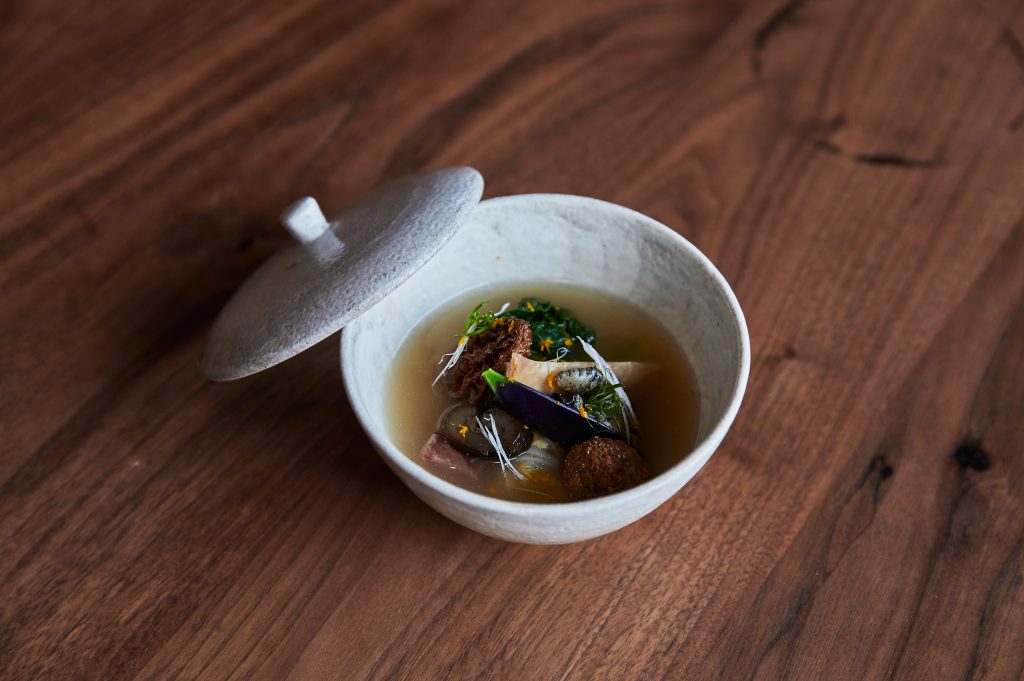
South of the Han River, dining rooms reflect Gangnam’s engineered ambition, where beef culture and technical sequencing define the tone rather than nostalgia. Mingles, now holding three Michelin stars and widely regarded as the most complete restaurant in Korea, presents contemporary Korean cuisine with clean execution and lucid storytelling, each course unfolding with deliberate pacing that privileges clarity over spectacle. Born & Bred Original translates Majang’s hanwoo heritage into a fine dining framework, ageing and selecting cuts with discipline that elevates KBBQ lineage into a composed tasting experience. Kang Minchul Restaurant operates within a Korean French register, applying classical French technique to ingredients and flavour logic rooted in Korean sensibility, resulting in tasting menus that feel elegant and structurally resolved rather than hybrid for effect. In this geography, luxury reads as controlled and architectural, with pacing, sourcing and proportion handled with intent rather than indulgence.
North Of The Han: Botanicals, Seasonality And Scholarly Control
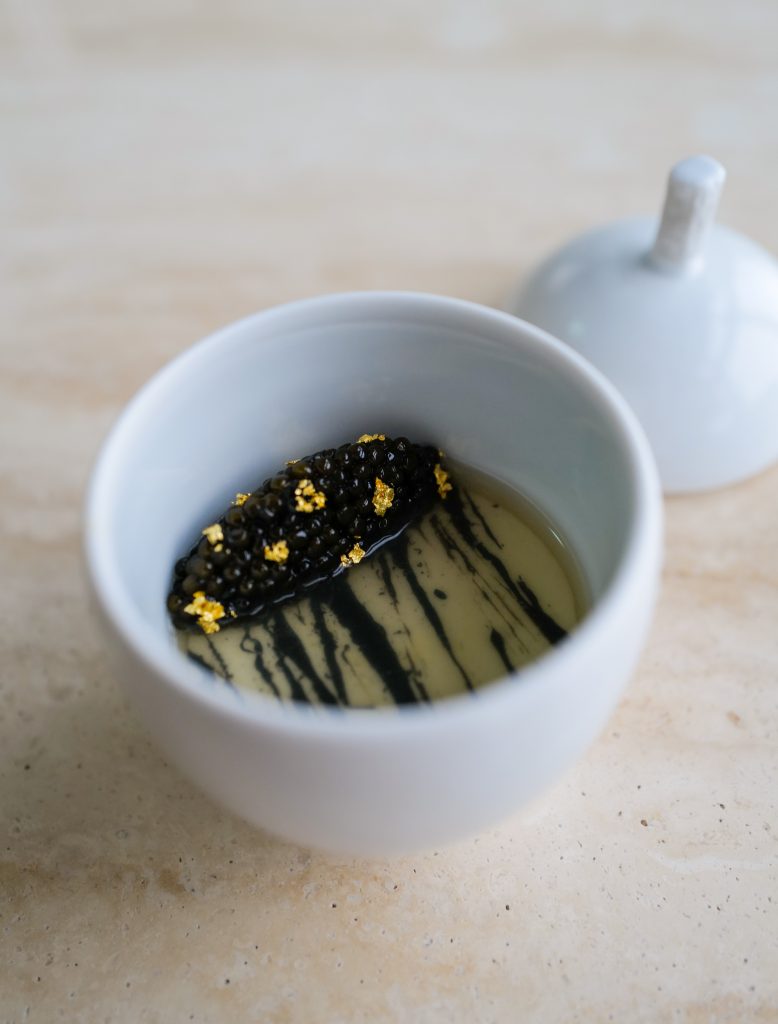
North of the Han, refinement shifts toward seasonal intelligence and philosophical clarity rather than muscular display. Eatanic Garden pairs elevated views with elegant modern Korean cuisine that favours botanical nuance and composed textures over excess. Solbam articulates a neo classic Korean language grounded in seasonal rhythm, building menus that feel contemporary yet anchored in recognisable structure. Giwa Kang reinterprets Korean classics with disciplined reduction, its gochujang duck demonstrating how tradition can be sharpened without distortion. Joo 052 reflects a younger generation of Korean chefs advancing contemporary Korean cuisine with confidence, while JL Dessert Bar concludes the sequence with a savoury leaning tasting format, most notably a carbonara that blurs pastry and pasta logic with technical assurance. In this half of the city, authority is intellectual and seasonal rather than forceful, proving that refinement in Seoul can be quiet while remaining decisive.
Iced Americano And Ritual Discipline
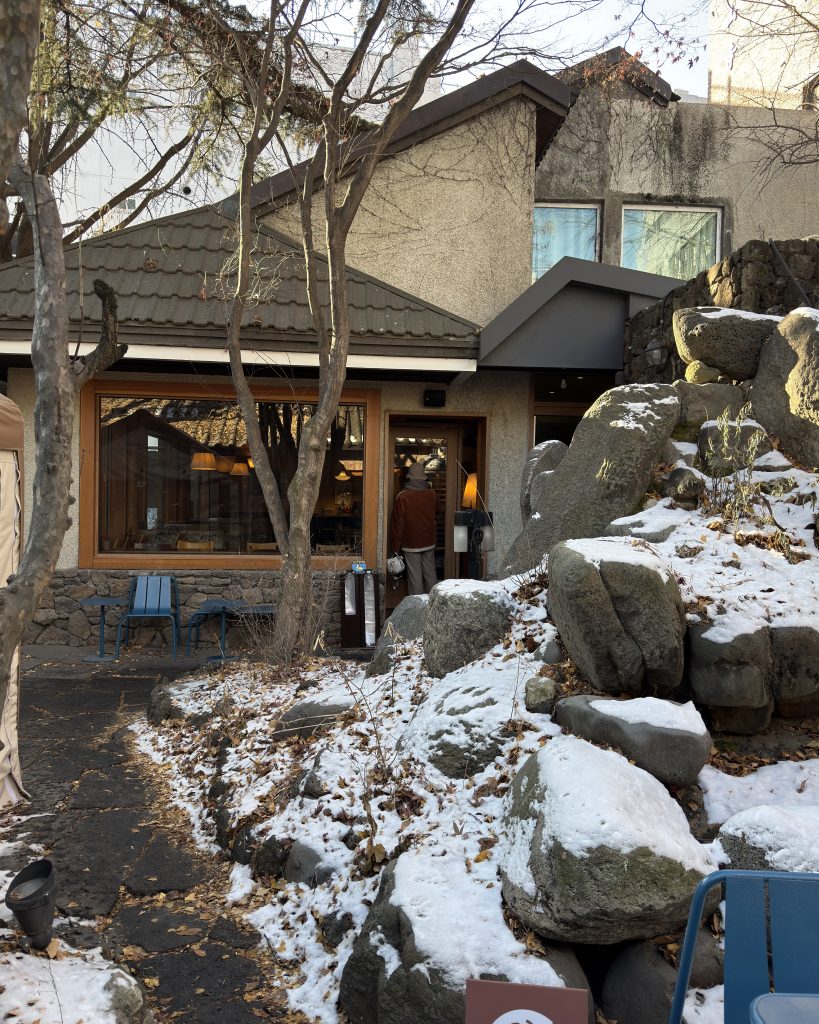
Between these meals, Seoul sustains itself through caffeine rather than ceremony, with the iced Americano, known locally as “aa”, consumed year round and even in winter without hesitation. The preference is revealing, because the drink privileges clarity, bitterness and efficiency over comfort, aligning with a broader instinct toward functional energy. Fritz Janchung, housed in a restored hanok, approaches roasting with structural seriousness, while Tellers 9.5 at Anteroom extends that calibration into a more design conscious register without diluting intent. Coffee in Seoul is less indulgence than fuel, and discipline extends to the cup.
Cocktails After Dark, Structured By Intent
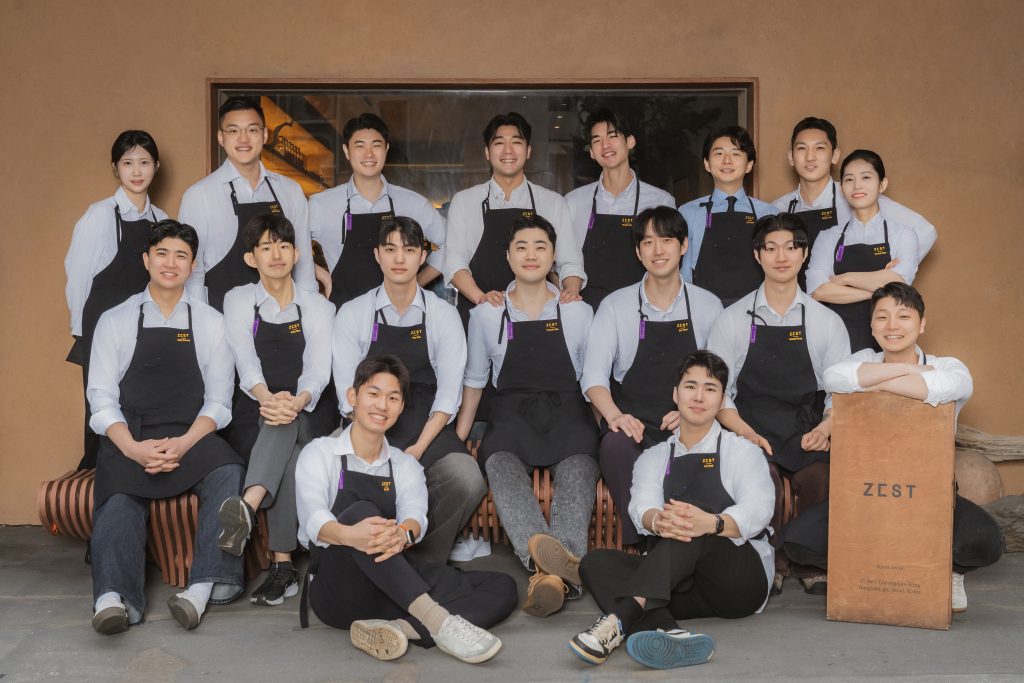
When the city shifts into evening, the same discipline that governs the plate carries into the glass, particularly in Gangnam and Cheongdam where polish is assumed and identity must be earned. Zest has built its reputation on sustainability, designing cocktails around waste reduction, seasonal sourcing and technical clarity, proving that environmental responsibility and precision can coexist without compromise. Alice operates inside a whimsical Alice in Wonderland narrative, yet beneath the theatrical framing lies technical backbone, classics recalibrated with careful balance so that concept never overrides structure. Kiez draws influence from Hamburg’s bar culture, favouring savoury profiles, tight stirring and measured dilution that privilege texture over garnish, while Le Chamber remains a classic bar in the truest sense, protecting foundational recipes and executing them with consistency rather than reinterpretation.
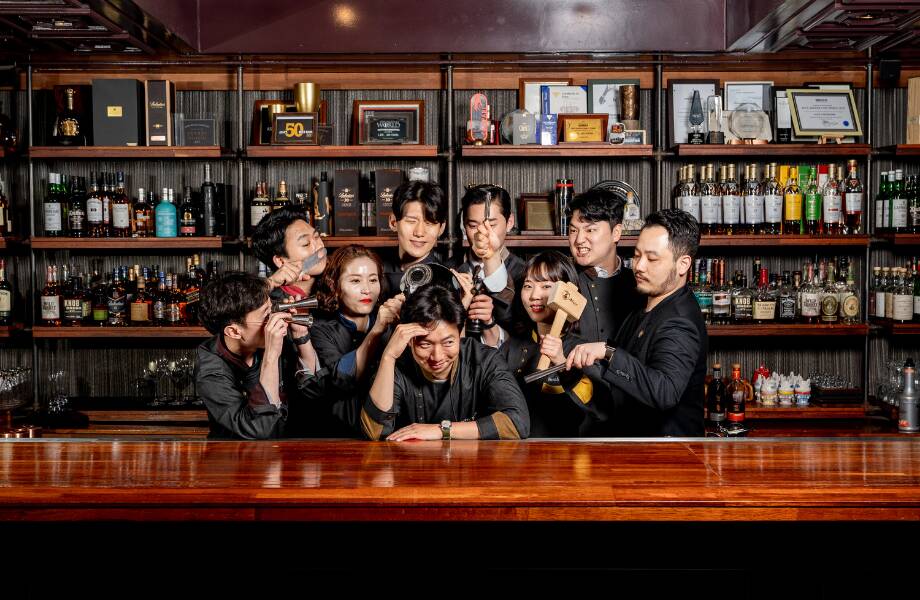
Soko leans into elegant classicism, its martini and widely regarded daiquiri among the most confident in the city, served with composure rather than flourish and love for champage. Cham in Season grounds its menu in agricultural rhythm, focusing on seasonal ingredients and low ABV compositions that adjust with the calendar, allowing freshness and restraint to lead. Across these counters, Seoul’s cocktail culture reveals itself not through noise but through calibration, where sustainability, narrative, heritage and seasonality are refined into drinks that prioritise intent over spectacle.
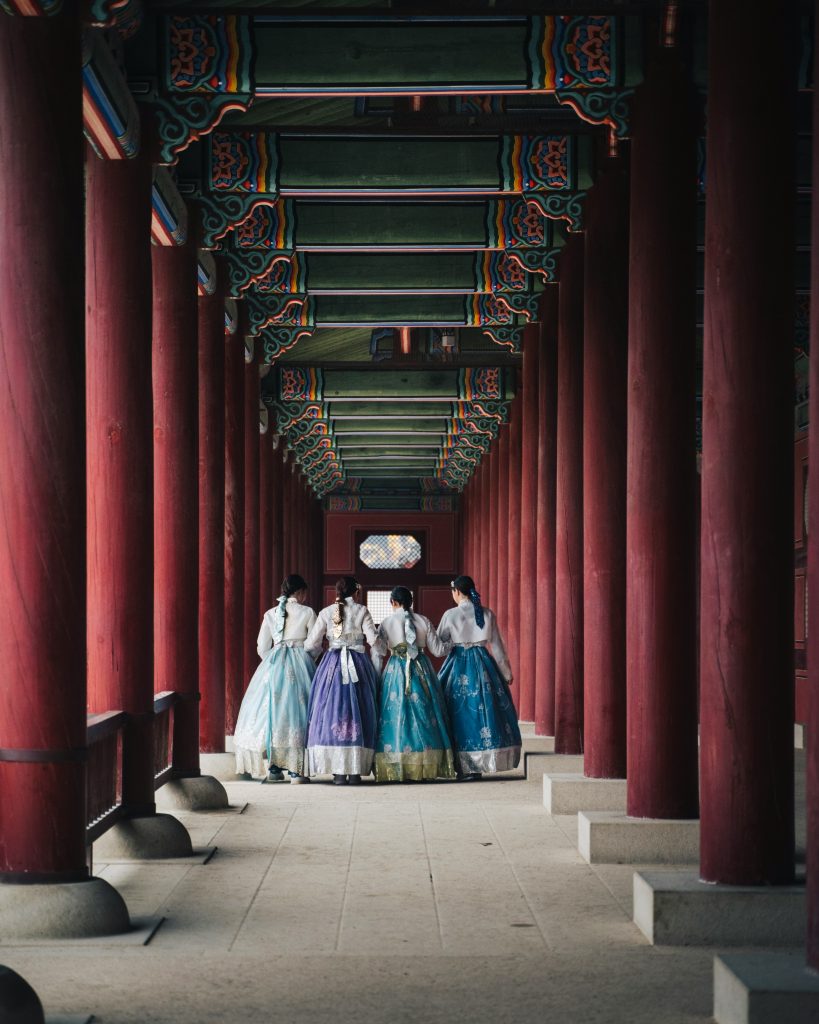
Living Between Palace Tiled Roofs And LED Screens
Seoul does not reward visitors who arrive seeking spectacle alone, because its credibility rests on continuity rather than performance. Fermentation deepens without overwhelming, fire refines without chaos, coffee fuels without ornament, and cocktails balance precision with restraint, all unfolding beneath palace tiled roofs and LED screens that coexist without contradiction. For travellers who recognise structure beneath surface, Seoul reads not as frenetic, but as exact, a capital defined not by speed, but by the discipline with which it organises everything it absorbs.